
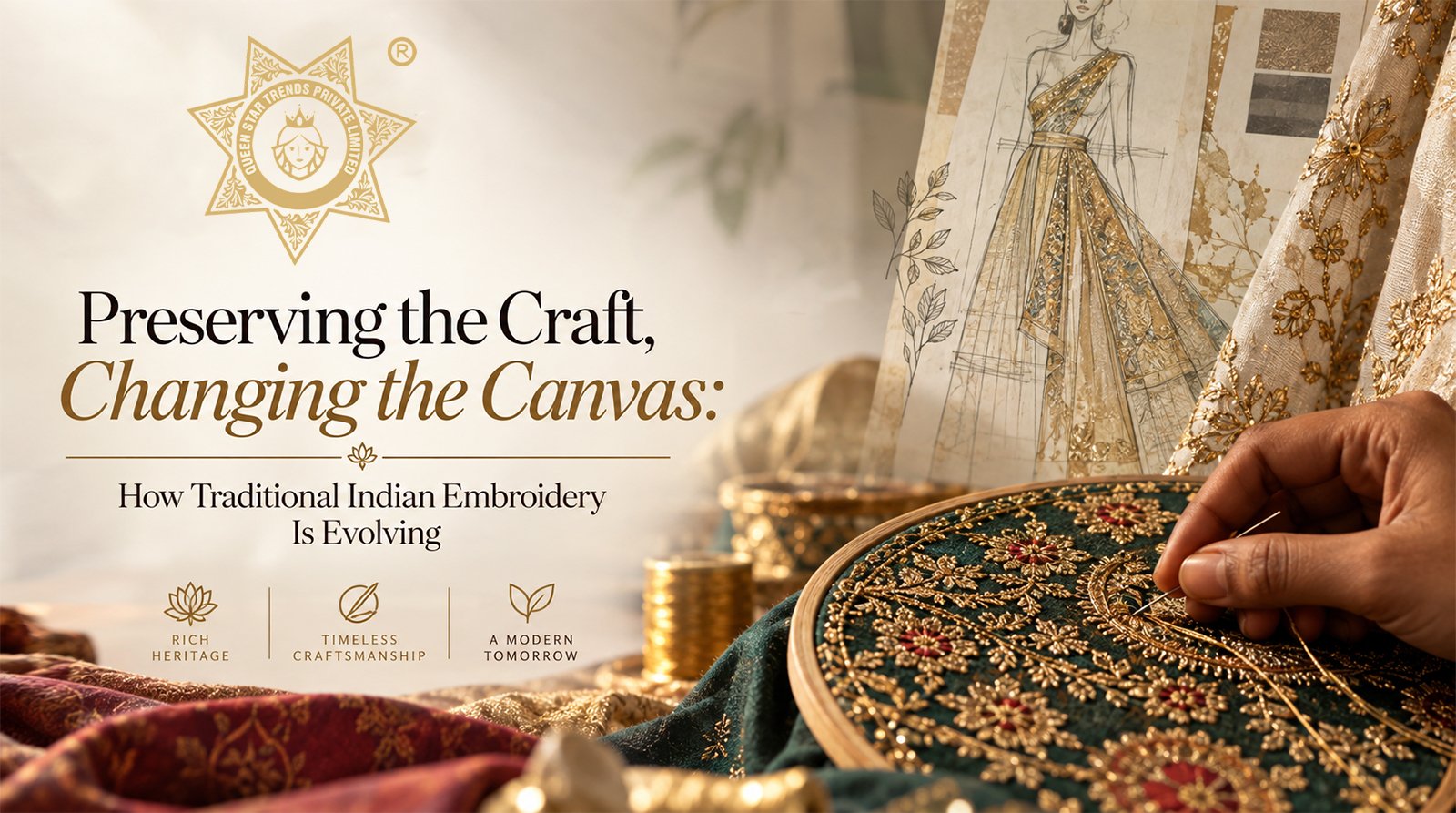
Indian embroidery has never been just decoration. For generations, every stitch has carried a little bit of history, craftsmanship, and imagination. From delicate threadwork created by hand to intricate embellishments seen on bridal and festive wear, embroidery has always had a special place in Indian fashion.
But fashion changes. So does embroidery.
Today, traditional embroidery is finding its way onto new fabrics, modern silhouettes and contemporary fashion collections. The craft remains familiar, but the canvas is changing.
From Traditional Craft to Contemporary Design
Traditionally, embroidery was closely connected with regional craftsmanship. Different parts of India developed their own distinctive styles, stitches, motifs and materials. Artisans often spent hours, sometimes days, creating intricate patterns by hand.
The beauty was in the imperfection and individuality of each piece.
Modern fashion, however, demands versatility. Designers are experimenting with embroidery on lightweight fabrics, textured surfaces and unconventional silhouettes. Traditional floral and geometric motifs are being reinterpreted with cleaner layouts, tonal colours and contemporary patterns.
The result is a new interpretation of an old craft—one that respects its roots without being restricted by them.
The Role of Texture in Modern Embroidery
One of the most noticeable changes is the growing interest in texture and dimension.
Instead of embroidery simply creating a flat decorative pattern, modern techniques can add depth, raised surfaces and tactile details to fabric. Tufted and textured embroidery are examples of how traditional ideas can evolve into something visually different.
This shift has opened up new possibilities for designers creating statement sarees, lehengas, dresses, jackets and contemporary ethnic wear.
Technology Meets the Artisan Touch
Technology has also changed the embroidery landscape.
Modern embroidery machines, digital design tools and improved production techniques allow intricate patterns to be developed with greater consistency and efficiency. At the same time, handcrafted techniques continue to offer a level of individuality and detail that technology cannot completely replicate.
Today, the two approaches often exist alongside each other. Designers and textile businesses can combine traditional inspiration with modern production methods to create fabrics that feel both familiar and fresh.
Changing With the Fashion Consumer
Today’s fashion consumer is increasingly interested in details that make an outfit distinctive. Instead of simply looking for more embellishment, buyers are paying attention to texture, craftsmanship, fabric quality and design personality.
This has encouraged textile makers to think beyond conventional embroidery. The focus is shifting toward creating fabrics that can become an important part of the garment’s identity.
Across Surat’s textile ecosystem, this evolution can be seen in the growing variety of embroidered and textured fabrics being developed for designers, boutiques and fashion manufacturers. Businesses such as Queen Star Trends are part of this changing landscape, exploring contemporary fabric expressions while keeping the richness of textile craftsmanship at the centre.
Keeping the Craft Alive by Letting It Evolve
Preserving embroidery does not necessarily mean keeping it exactly as it was.
Sometimes, preservation means giving traditional craftsmanship a new form.
When heritage techniques meet modern fabrics, technology and design thinking, embroidery gets another chapter in its story. The stitches may change. The textures may change. The applications may change.
But the idea remains the same: creating something beautiful, one detail at a time.
FAQs
1. Why is traditional embroidery still important in modern fashion?
Traditional embroidery carries cultural craftsmanship and distinctive design techniques that continue to inspire contemporary fashion.
2. How has embroidery changed over time?
Embroidery has evolved through new fabrics, machinery, digital design, textures, colours and contemporary motifs while retaining inspiration from traditional craftsmanship.
3. What is textured or tufted embroidery?
Textured or tufted embroidery creates raised, dimensional details on fabric, giving the surface greater depth and a more tactile appearance.
4. Is hand embroidery still used today?
Yes. Hand embroidery continues to be valued for its craftsmanship, individuality and intricate detailing, particularly in premium and artisanal fashion.
5. How is technology influencing embroidery?
Digital design tools and modern embroidery machinery help create complex patterns with greater precision, consistency and production efficiency.
6. What types of fashion use embroidered fabrics?
Embroidered fabrics are commonly used for sarees, lehengas, suits, gowns, dresses, jackets and other occasion and contemporary fashion pieces.