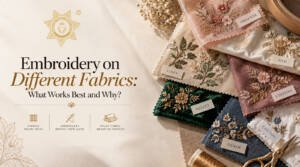

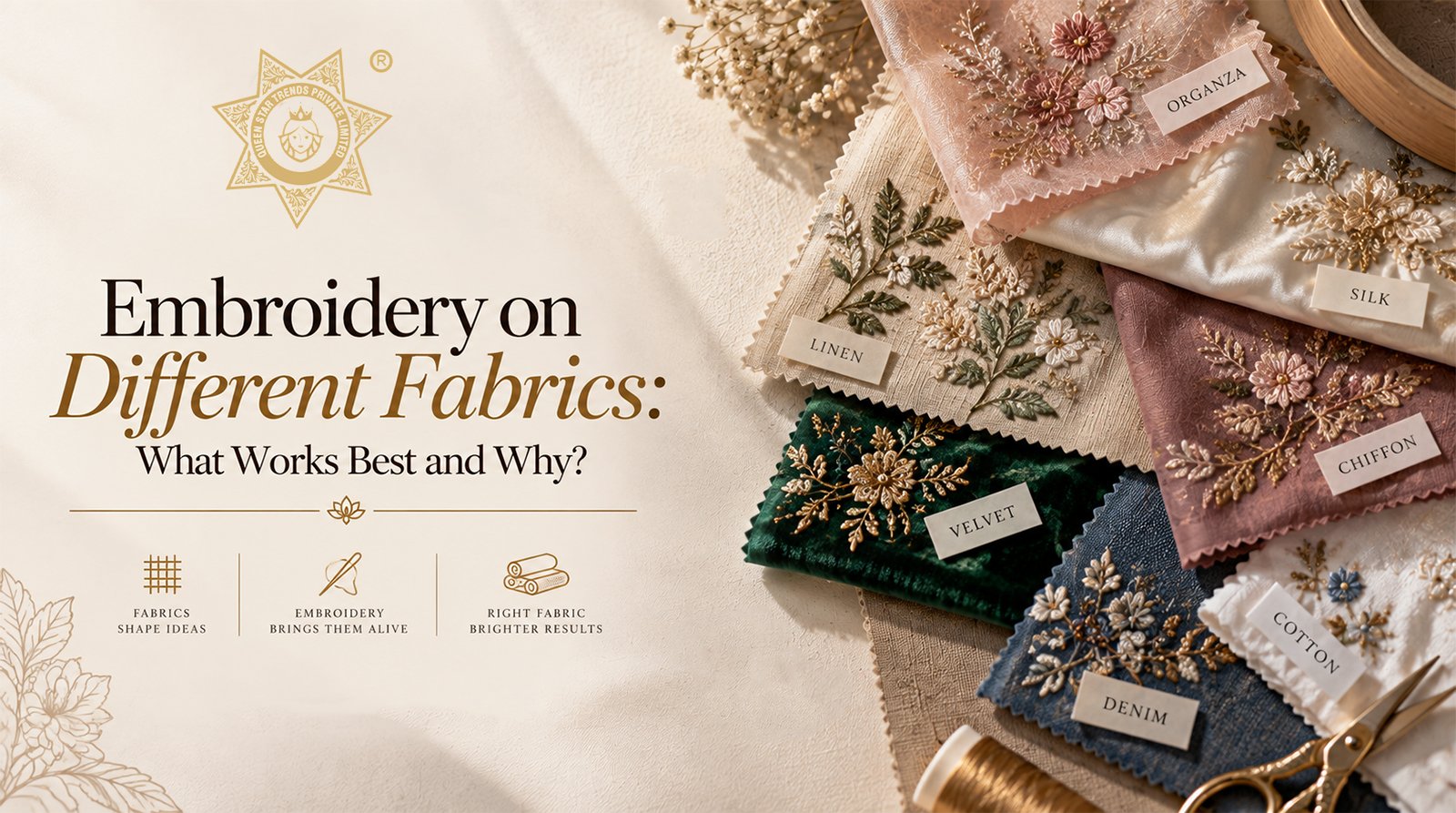
Embroidery can completely change the personality of a fabric. A simple surface can become textured, detailed and visually striking with the right threadwork. But there is one important detail that is often overlooked: not every embroidery technique works equally well on every fabric.
The fabric underneath the embroidery matters just as much as the design itself.
From lightweight chiffon and flowing georgette to structured fabrics and sheer net, each textile responds differently to stitching, thread, density and embellishment. Understanding that relationship helps designers and fabric buyers make better choices.
1. Chiffon: Light, Delicate & Elegant
Chiffon is known for its lightweight, fluid nature, making it popular for sarees, dupattas, dresses and occasionwear.
Because the fabric is delicate, embroidery generally works best when the design is relatively lightweight. Fine threadwork, scattered motifs and subtle embellishment can enhance chiffon without taking away its natural movement.
Heavy embroidery needs careful consideration because excessive stitching can affect the drape.
2. Georgette: A Versatile Embroidery Canvas
Georgette offers slightly more body than chiffon while retaining a graceful flow.
This makes it suitable for a wider variety of embroidery styles. Floral motifs, geometric patterns, thread embroidery and textured details can all work beautifully depending on the desired look.
For designers, georgette can offer a useful balance between movement and structure, making it suitable for both contemporary and traditional fashion.
3. Net: Perfect for Statement Detailing
Net fabrics provide an entirely different canvas.
Their open structure creates opportunities for embroidery to become the focal point of the design. Floral vines, motifs, borders and intricate patterns are frequently used to create dramatic effects.
Net is especially popular in bridalwear, lehengas, gowns and dupattas where embroidery needs to create visual impact without making the entire garment appear too heavy.
4. Organza: Structure Meets Embroidery
Organza has a crisp, structured appearance that allows embroidery to stand out clearly.
Because the fabric holds its shape, embroidered motifs can create a sharp and sophisticated visual effect. Floral embroidery, minimal geometric patterns and carefully placed motifs work particularly well for contemporary occasionwear.
Organza also pairs naturally with the current preference for lightweight fabrics with statement detailing.
5. Velvet & Heavier Fabrics: Embroidery With Depth
Heavier fabrics provide a stronger foundation for dense embroidery and elaborate designs.
Velvet, for example, has a rich surface that can complement metallic threads, raised embroidery and intricate motifs. These combinations are particularly effective for winter collections, festivewear and luxury occasionwear.
Choosing the Right Combination
So, what actually works best?
There isn’t one universal answer.
The right combination depends on the fabric’s weight, structure, drape, surface, embroidery density and intended garment. A delicate fabric may benefit from restrained detailing, while a structured or heavier textile can accommodate more elaborate work.
This is why fabric development is as much about understanding the material as it is about creating a beautiful design.
For textile houses such as Queen Star Trends, this understanding opens up exciting possibilities—from experimenting with embroidered surfaces to developing contemporary textures that work across different fashion applications. The goal isn’t simply to add embroidery to fabric, but to create a combination where the fabric and embroidery enhance each other.
FAQs
1. Which fabric is best for embroidery?
There is no single best fabric. Georgette, net, organza, velvet and several other fabrics can work well depending on the embroidery style and garment.
2. Can chiffon be embroidered?
Yes. Lightweight embroidery and carefully placed motifs can work beautifully on chiffon while preserving its flow and drape.
3. Is net fabric suitable for heavy embroidery?
Yes. Net can support intricate and visually prominent embroidery, particularly for bridalwear, lehengas, gowns and dupattas.
4. Why does fabric choice matter for embroidery?
The fabric’s weight, structure and drape influence how embroidery sits on the surface and how the finished garment looks and moves.
5. Which fabric works well with textured embroidery?
Fabrics with sufficient structure or stability can be suitable for textured and raised embroidery, although the specific technique and embroidery density also matter.
6. How should designers choose an embroidered fabric?
Consider the garment type, desired drape, embroidery density, texture, end-use and overall design aesthetic before selecting the fabric.